Alabama Angling For Longer Snapper Season
Ken Cooper • May 15, 2026
Season will run daily rather than on limited weekends
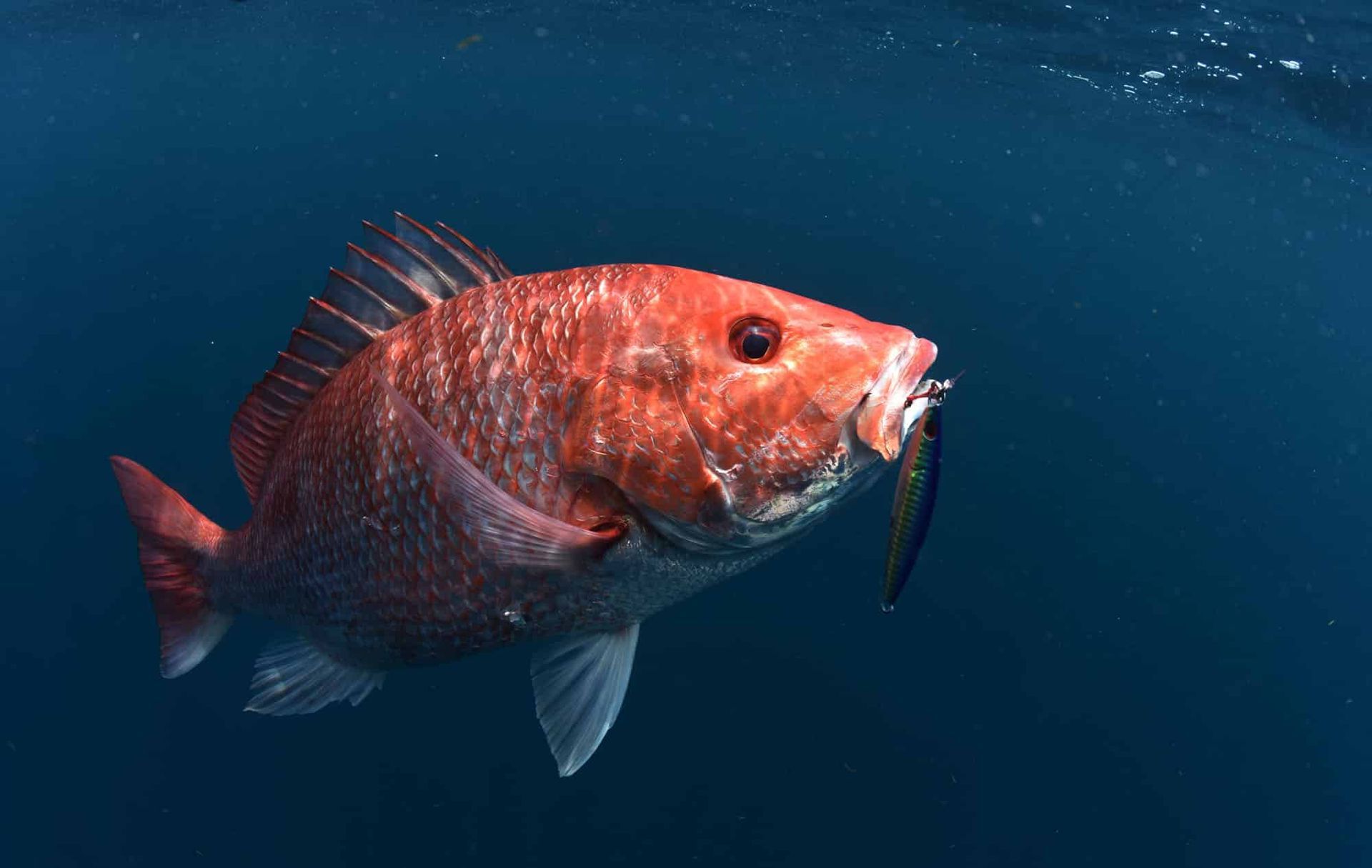
Orange Beach, Ala. — (GSN) — Alabama anglers will soon have more time on the water as the 2026 red snapper season opens with expanded access. State officials say the new approach offers more flexibility than in past years. The season will run daily rather than on limited weekends. Leaders expect the change to improve safety and anglers' success.
The season for private recreational anglers and state-licensed charter boats opens on May 22, the Friday before Memorial Day. It will remain open until the state’s quota of 664,552 pounds is reached or until Dec. 31, 2026, whichever comes first. Federally permitted charter boats will follow a different schedule set by NOAA Fisheries.
Those federally permitted vessels can begin fishing at 12:01 a.m. on June 1, 2026. Their season will close at 12:01 a.m. on Oct. 26, 2026. State officials said the split system allows Alabama to manage its waters while still complying with federal rules offshore.
“Under state management, we have the ability to adapt our red snapper season to meet the needs of anglers who fish in Alabama,” said Chris Blankenship, commissioner of the Alabama Department of Conservation and Natural Resources. He said opening seven days a week gives anglers more chances to fish when weather conditions are favorable.
State data shows that anglers harvested about 623,029 pounds of red snapper in 2025, roughly 40,000 pounds below the limit. Officials track those numbers through the Snapper Check reporting system, which is required for species such as red snapper, greater amberjack, and gray triggerfish.
The Marine Resources Division also relies on surveys to measure fishing activity. In 2026, the University of South Alabama began conducting phone surveys; anglers selected for these calls will see "AL FISH SURVEY" on their caller ID. For those participating via digital correspondence, the "University of South Alabama" will be listed in the "From" field of the email.
Officials noted that during the 2025 season, the Marine Resources Division transitioned to a seven-day-a-week schedule starting September 1. This extension was implemented specifically because mid-season projections showed the state’s harvest allocation would not be reached under the original weekend-only format. "That was good in respect that we tried to give anglers as much opportunity... so we could try to reach our quota," said Director Kevin Anson, noting that favorable late-year weather further aided the catch.
“Under state management, we have the ability to adapt our red snapper season to meet the needs of anglers who fish in Alabama,” said Commissioner Chris Blankenship. He noted that the seven-day-a-week schedule provides anglers with greater flexibility when planning their fishing trips, allowing them to better account for favorable weather and sea conditions.
While some anglers have raised concerns about the size of the fish, Marine Resources Division Director Kevin Anson explains that current management prioritizes access over specific size targets. He noted that under previous federal rules, extremely short seasons led to "high-grading," in which anglers kept only the largest fish to make the most of limited days—a practice that artificially inflated average-size data. With longer, more predictable state seasons, the "derby mentality" has faded, resulting in a more natural harvest pattern in which average fish sizes appear smaller than during the federal era.
Researchers continue to study the population through partnerships with the University of South Alabama’s Stokes School of Marine and Environmental Sciences. Data from an independent survey conducted by Dr. Sean Powers indicates that while average fish sizes have decreased recently, the overall abundance of red snapper has increased compared to earlier years. While a new federal stock assessment is expected by the end of 2026, state managers are already utilizing these university findings to guide current decisions.
The daily limit is two fish per person, with a minimum size of 16 inches. Anglers 16 and older must have a valid saltwater fishing license and a reef fish endorsement. Some residents, including those 65 and older, must complete free registration.
Officials also announced that the AL Creel survey has received federal certification, a move Commissioner Blankenship says will enable fishery managers to produce more accurate local estimates. The program will run alongside the federal Access Point Angler Intercept Survey (APAIS) through 2026. This dual-run period sets the stage for 2027, when Alabama will move forward with AL Creel as the primary system while NOAA Fisheries simultaneously discontinues funding for the federal APAIS survey.
The survey includes dockside interviews and weekly phone or email reports. Collected data help estimate catch levels and guide management decisions. State officials said angler cooperation remains important as the new system continues to expand.












Recent Posts