
Congress Moves to Make Daylight Saving Time Permanent
Gulf Shores News Staff • July 12, 2026
Congress will vote on ending practice of changing time

Gulf Shores, Ala. — (GSN) — Imagine what more hours of sunshine could do for tourism if an extra hour of daylight was added to every day. A significant legislative push to end the twice-yearly ritual of changing clocks is gaining momentum in Washington. The U.S. House Energy and Commerce Committee recently voted 48-1 to advance the "Sunshine Protection Act," a bill designed to make daylight saving time (DST) the permanent year-round standard.
The push is called "Locking the Clock" and is an attempt to eliminate the biannual time change.
Proponents of the legislation argue that the current practice is outdated, inconvenient, and costly. A congressman has stated that permanent daylight saving time could improve public health, reduce traffic accidents, lower crime rates, and encourage more outdoor activity.
The bill has received significant political backing, most notably from President Donald Trump. In recent posts on Truth Social, the President praised the move as a "commonsense reform," characterizing the current clock-switching practice as a "ridiculous, twice yearly production" that wastes time and money. He has pledged to work hard to see the act signed into law.
Critics, including medical organizations such as the American Academy of Sleep Medicine and the American Medical Association, have argued that human body clocks align more closely with standard time than with daylight saving time. Sen. Tom Cotton (R-AR) has been a vocal opponent, warning that making daylight saving time permanent could lead to "dark and dismal" winter mornings, potentially forcing children to walk to school in pitch-black conditions. He noted that during a brief period in 1974 when a similar change was implemented, the experiment proved unpopular and was quickly repealed.
Currently, states have the authority to opt out of daylight saving time and remain on standard time, as seen in Hawaii and most of Arizona. However, states do not have the legal authority to unilaterally adopt permanent daylight saving time; federal law requires a repeal of the Uniform Time Act of 1966 for such a change to take effect.
As the Sunshine Protection Act now heads to the House floor for consideration, the outcome remains uncertain. Lawmakers and the public are now watching closely to see if this iteration, backed by the administration and a committee-level consensus, will finally reach the finish line.
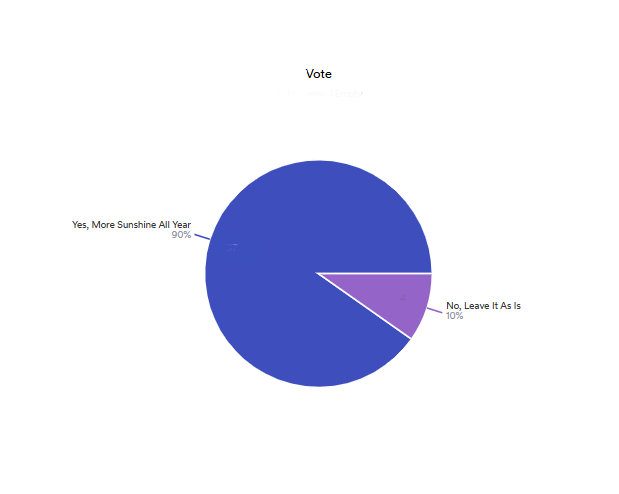
POLL RESULTS:























Recent Posts