
God's Gift To Car Wash Owners
Gulf Shores News Staff • September 30, 2026
Twice a year we see these insects swarm onto our cars
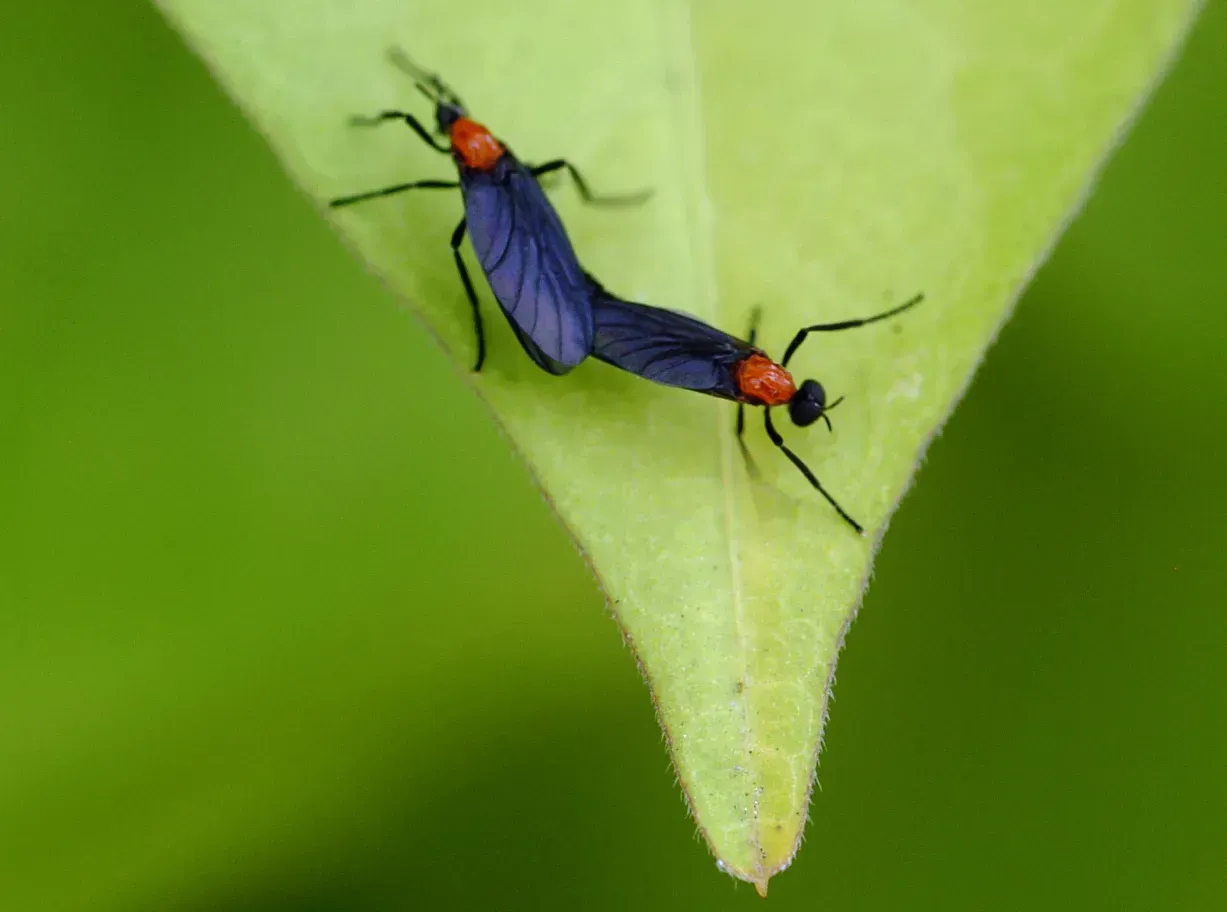
Gulf Shores, Ala. — (GSN) — Have you ever driven somewhere and gotten out of your car, only to see the front grill covered in tiny black specks? If you live in or travel through the Gulf Coast region, you are likely familiar with the seasonal emergence of lovebugs.
Lovebugs emerge in massive swarms twice a year during two primary flight periods: once in the spring (April to May) and again in the fall (August to September). Adult lovebugs emerge from the soil—where their larvae spend about six months breaking down decaying organic matter—to mate during a brief adult lifecycle that last only a few weeks.
Lovebug activity peaks during their two annual flight periods in late spring and late summer/early fall. During these weeks, drivers routinely encounter dense swarms of paired, slow-flying insects on windshields, vehicle grills, and outdoor surfaces across Gulf Coast communities.
Despite persistent urban legends suggesting lovebugs were created by genetic engineering or escaped from a university research laboratory, researchers confirm this is entirely a myth. Lovebugs are a non-native species first officially recorded in eastern Texas in 1940. By the 1970s, the species had naturally expanded its range throughout Florida and neighboring Gulf Coast states, where it is now a permanent part of the regional environment.
Why Do They Target Cars?
Vehicles attract lovebugs due to a specific chemical reaction. Exhaust fumes from automobiles mix with ultraviolet radiation from the sun, creating a reaction that mimics the scent of decaying plant matter—the precise environment female lovebugs seek out to lay their eggs.
While lovebugs do not bite, sting, or carry disease, motorists should clean them off vehicle paint promptly with water, as their residue becomes acidic and can damage a car's finish if left untreated.
To avoid the lovebugs you could choose not to drive during peak swarm hours between 10 a.m. and 6 p.m., or swerve as you drive to attempt to miss the bugs (we do NOT suggest either of these methods). Of course, if all else fails, you can simply accept your car's new aerodynamic textured finish of crushed lovebugs as modern abstract art, or resign yourself to being a lifelong, VIP patron of your local car wash until nature finally calls it a season.























Recent Posts