
How Does Alabama's GDP Compare To Other States
R. Peevy • August 11, 2026
Alabama's GDP ranks middle of the pack
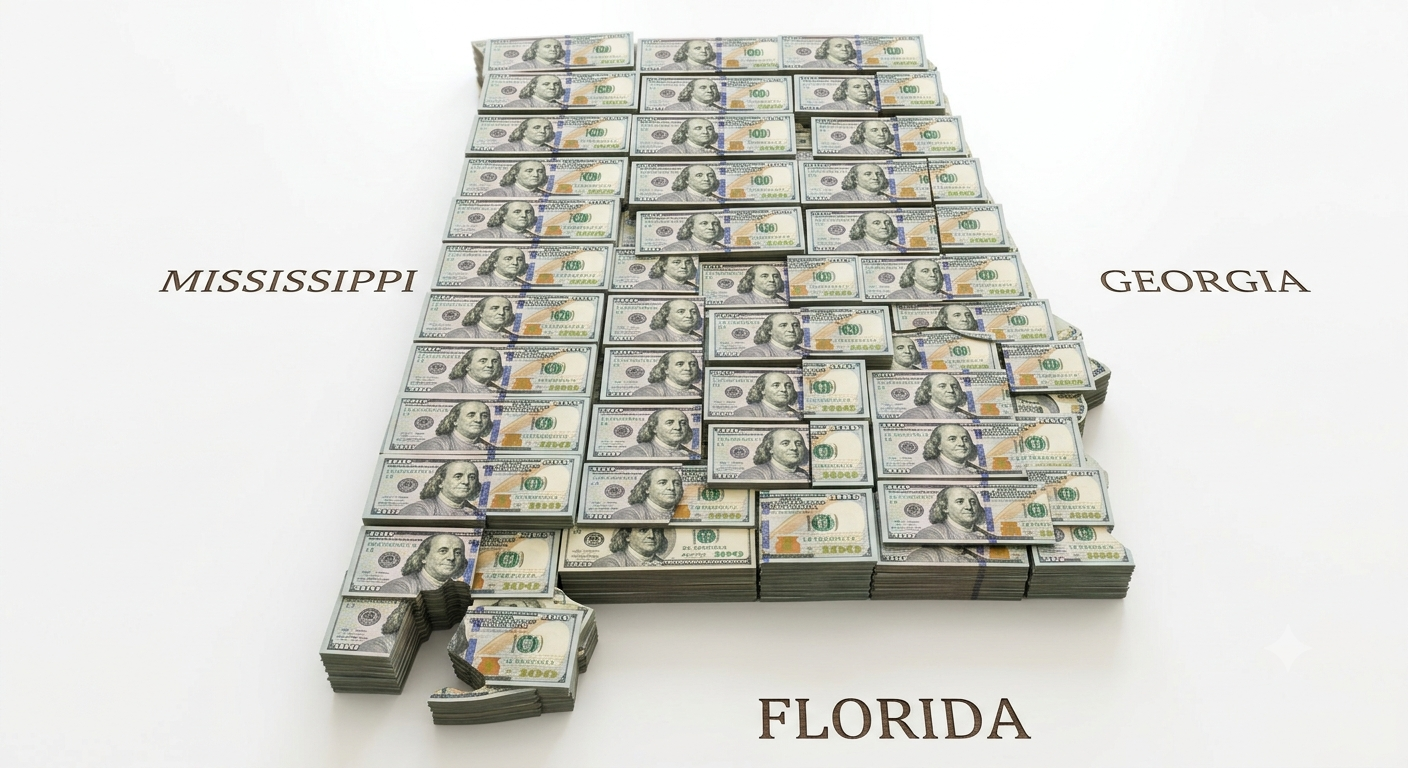
Gulf Shores, Ala. — (GSN) — Gross Domestic Product (GDP) is a vital metric for understanding the economic landscape of the United States. It measures the total value of all goods and services produced within a region’s borders, serving as a primary indicator of economic health and activity. By examining GDP, we can see which states drive the nation's economy and how different industries contribute to prosperity.
Across the United States, GDP varies significantly based on population, industry composition, and regional resources. As of 2025, the U.S. Nominal GDP at current prices reached $30.762 trillion.
The states with the largest economies often benefit from a diverse mix of technology, finance, manufacturing, and agricultural sectors. California continues to lead the nation with a GDP of $4.251 trillion, followed by Texas ($2.904 trillion) and New York ($2.468 trillion). These powerhouses are central to the national economy, acting as hubs for major global industries. Conversely, states with smaller economies—such as Vermont, Wyoming, and Alaska—often have distinct economic profiles shaped by unique geographic and industrial factors.
Alabama’s economy is robust and continues to evolve, reflecting the state's industrial strengths. In 2026, Alabama’s real GDP is approximately $341.1 billion. reflecting continued growth. Alabama's economic progress is positive, with both productivity and output showing upward trends.
- California — $4.251 trillion
- Texas — $2.904 trillion
- New York — $2.468 trillion
- Florida — $1.835 trillion
- Illinois — $1.202 trillion
- Pennsylvania — $1.056 trillion
- Ohio — $966.780 billion
- Georgia — $924.829 billion
- Washington — $894.990 billion
- North Carolina — $893.763 billion
- New Jersey — $887.175 billion
- Massachusetts — $820.105 billion
- Virginia — $798.448 billion
- Michigan — $730.068 billion
- Arizona — $598.189 billion
- Tennessee — $589.818 billion
- Colorado — $584.324 billion
- Maryland — $568.140 billion
- Indiana — $545.234 billion
- Minnesota — $531.465 billion
- Wisconsin — $473.037 billion
- Missouri — $468.470 billion
- South Carolina — $378.831 billion
- Connecticut — $376.455 billion
- Oregon — $342.850 billion
- Alabama — $341.154 billion
- Louisiana — $340.080 billion
- Utah — $315.973 billion
- Kentucky — $306.897 billion
- Nevada — $281.454 billion
- Iowa — $277.110 billion
- Oklahoma — $274.421 billion
- Kansas — $241.378 billion
- Arkansas — $198.422 billion
- Nebraska — $198.073 billion
- Mississippi — $165.069 billion
- New Mexico — $152.779 billion
- Idaho — $135.553 billion
- New Hampshire — $125.523 billion
- Hawaii — $124.608 billion
- Delaware — $117.218 billion
- West Virginia — $109.277 billion
- Maine — $102.844 billion
- Rhode Island — $83.956 billion
- Montana — $82.358 billion
- North Dakota — $81.883 billion
- South Dakota — $80.650 billion
- Alaska — $75.012 billion
- Wyoming — $52.622 billion
- Vermont — $48.350 billion
Understanding these figures helps illuminate how Alabama fits into the broader national picture. While major coastal states often dominate headlines with the largest total GDPs, Alabama’s consistent growth and specialized industry base—particularly in manufacturing and professional services—remain critical components of the state's long-term prosperity.























Recent Posts