The Tiny Guardians of the Dunes and the Bane of Beachfront Developers
Gulf Shores News Staff • September 9, 2026
Alabama Beach Mouse Experts To Talk At Gulf State Park
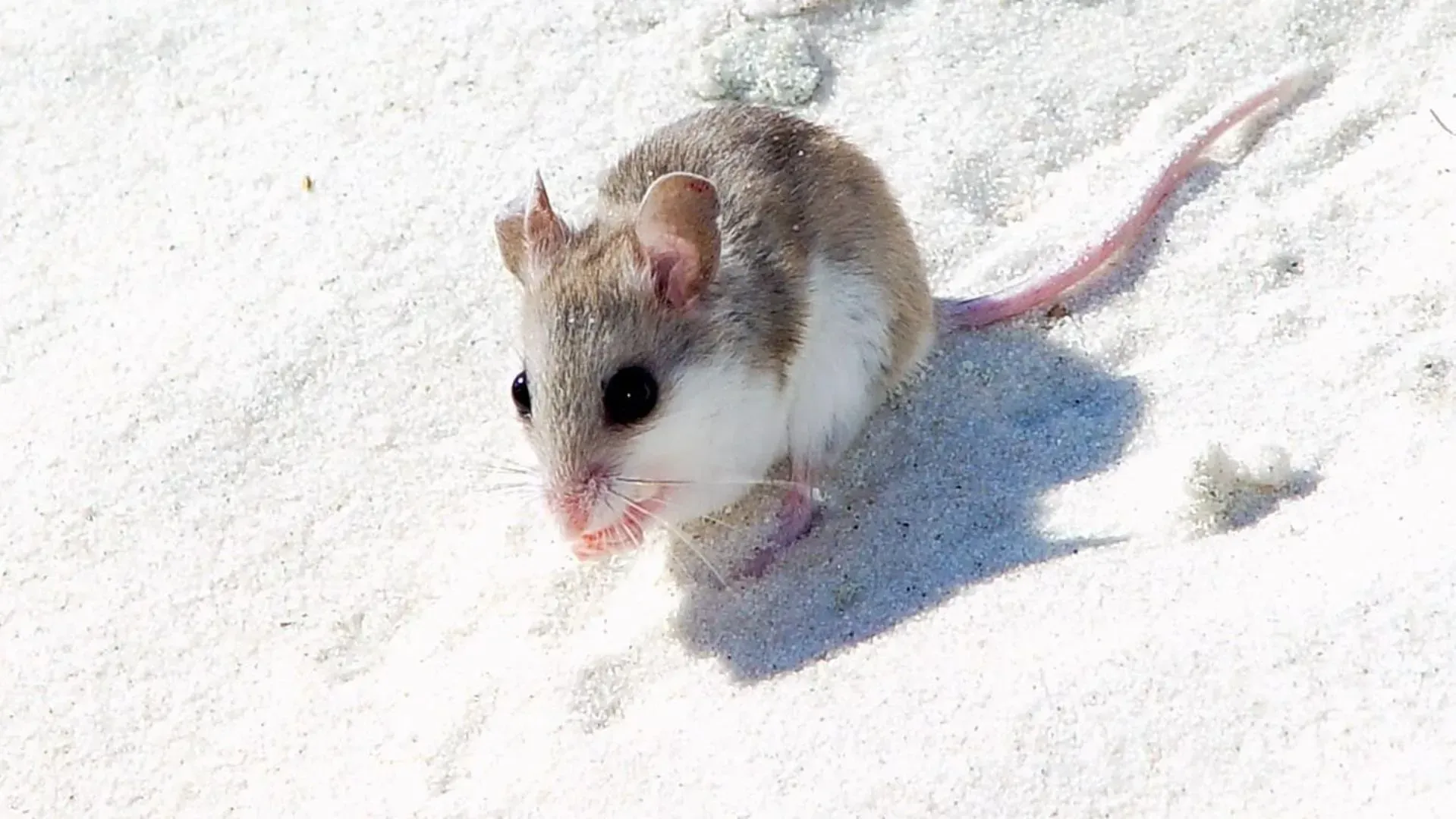
Orange Beach, Ala. — (GSN) — The white-sand beaches of Gulf Shores and Orange Beach are famous for their beauty, but one of their most critical caretakers is an endangered resident that most people never see. Both the Alabama beach mouse and the Perdido Key beach mouse are federally protected, endangered subspecies that call this coastal region home. These tiny, nocturnal rodents—measuring less than six inches in length—are highly adapted to the coastal strand community, making their homes among the sand dunes. While they may be small, their impact on the health, stability, and preservation of the Alabama Gulf Coast is immense.
The beach mouse serves as a vital ecological engineer for the coastal dune ecosystem. Their impact is felt across several key areas:
- Dune Stabilization and Growth: As the mice forage, they carry seeds from native plants like sea oats and bluestem back to their underground burrow networks. Many of these seeds are dropped along their tunnels, allowing more vegetation to grow. This plant life strengthens the dunes, preventing beach erosion and protecting coastal communities from storm surges.
- Seed Dispersal and Plant Diversity: By transporting seeds across the dunes, the beach mouse maintains plant diversity and helps distribute vegetation throughout the coastal community.
- Natural Pest Control: Preying on insects helps beach mice regulate insect populations and act as a natural pest control mechanism.
- Food Chain Support: They are an important part of the food chain, serving as a primary food source for native dune predators like snakes and owls.
The present-day distribution of the beach mouse is greatly reduced and highly fragmented, with populations restricted to areas like the Fort Morgan Peninsula, the Perdue Unit of the Bon Secour National Wildlife Refuge, and Gulf State Park.
In June 2026, the South Alabama Land Trust (SALT) took over a long-standing agreement with the U.S. Fish and Wildlife Service to manage the beach mouse conservation fund. This fund collects fees assessed to developers whose projects impact beach mouse habitats, using the resources to acquire and protect continuous parcels of land on the Fort Morgan Peninsula.
The City of Orange Beach has implemented an HCP to protect the Perdido Key Beach Mouse and other sensitive wildlife, receiving an Incidental Take Permit (ITP) from the federal government to carefully manage development impacts. In January 2026, the Orange Beach City Council authorized a $53,100 contract with Wetland Sciences to develop its portion of the beach mouse HCP.
Public Education:
The South Alabama Land Trust, the organization, known as SALT, is hosting a free public event focused on the endangered Alabama Beach Mouse. The event is part of SALT's ongoing educational series, SALT Talks, which aims to spark meaningful conversations about the future of Alabama's natural landscapes. Admission is free, but registration is required due to limited seating at the venue.
The event is scheduled for Thursday, October 1, 2026, from 5:30 to 6:30 p.m. at the Gulf State Park Interpretive Center. Attendees can register via Eventbrite using the link provided by SALT. Organizers encourage the public to reserve seats early, as venue capacity is limited.






Recent Posts