
Mobile Bay Oyster Restoration Project Brings Hope For Reefs
K. Cooper • July 4, 2026
Oyster Reef Project brings new hope for area harvest

Baldwin County, Ala. — (GSN) — Limestone barges are currently traveling across Alabama to help restore oyster reefs in Mobile Bay. The effort is part of a major conservation project led by the Alabama Wildlife Federation and its partners. The rock, known as oyster cultch, will provide a hard surface for young oysters to attach and grow. The restoration aims to strengthen marine habitat, improve water quality and support Alabama's coastal ecosystem.
The latest shipment began its trip in early July 2026 from northwest Alabama and is expected to arrive on the Gulf Coast later this summer. The limestone is destined for oyster reef restoration near Cedar Point in southern Mobile County. Scientists will continue monitoring the restored reefs for years after the material is placed.
Oyster cultch is the hard substrate young oysters need to survive. Without a solid surface, oyster larvae settle in soft mud, where they cannot develop. Limestone has become a preferred material because it provides a durable foundation for new oyster reefs.
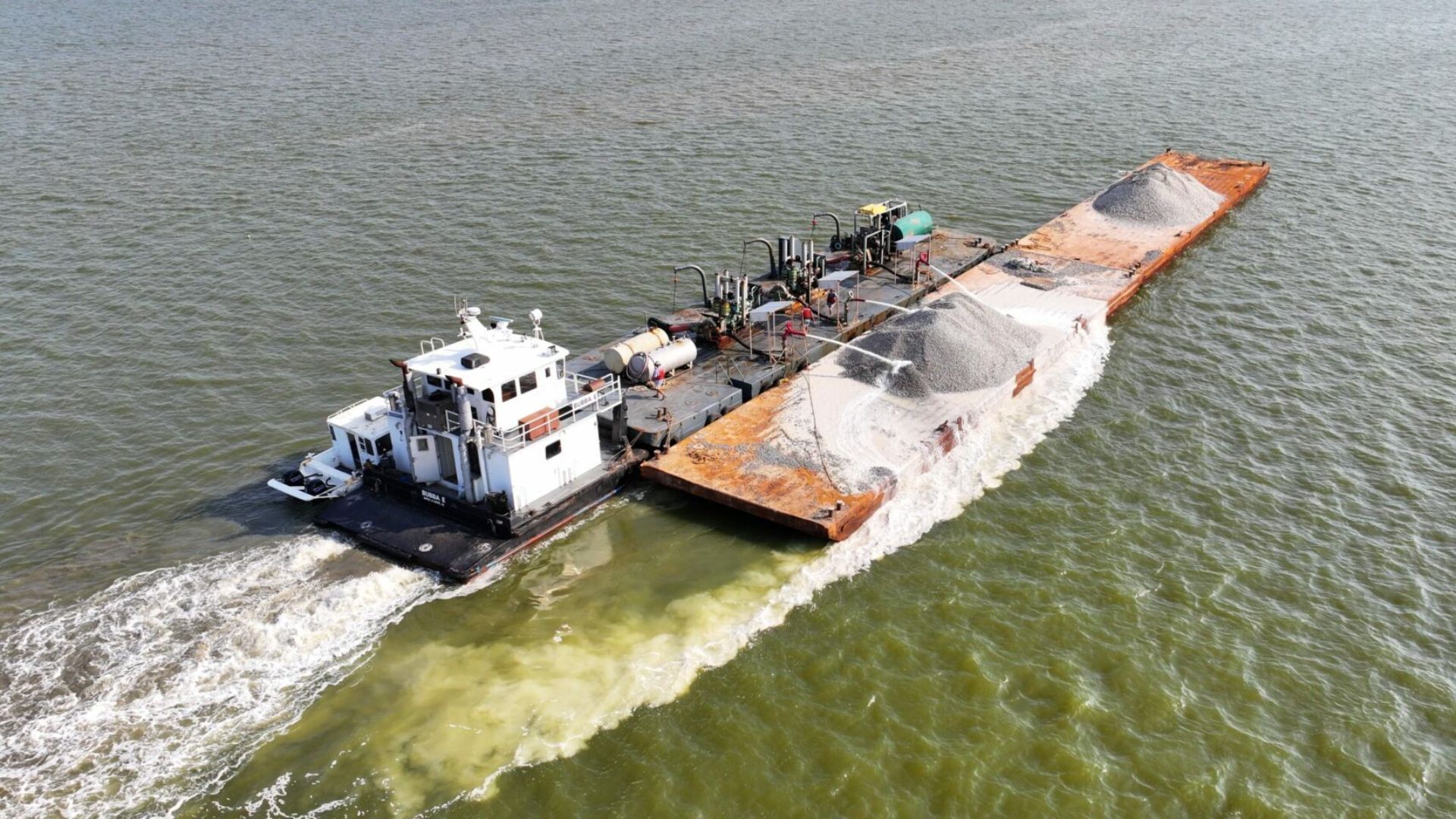
The journey begins at a limestone quarry in Tuscumbia. After being loaded onto barges, the rock travels hundreds of miles along the Tennessee and Tombigbee rivers to reach Mobile Bay. Residents along the waterways have watched the barges slowly make their way south.
Mobile Bay has lost much of its historic oyster habitat due to overharvesting, storms, shifting environmental conditions and sediment buildup. Rebuilding those reefs is important because oysters naturally filter the water by removing algae and other particles. Their reefs also provide habitat for fish, crabs, shrimp and many other marine species.
Healthy oyster reefs provide benefits beyond supporting marine life. They help absorb wave energy, reducing shoreline erosion during storms and high tides. Restored reefs can also support Alabama's commercial and recreational fisheries by improving coastal water quality.
The Alabama Wildlife Federation is leading the restoration effort, supported by public and private partners. Companies such as Vulcan Materials provide the limestone, while Cooper Marine transports the rock by barge. These partnerships help reduce costs and enable large-scale restoration projects to move forward.
Once the barges arrive at the restoration site, crews will use high-pressure water cannons to spread limestone across the bay bottom. This technique helps distribute the rock across the restoration area, creating a suitable habitat for oyster larvae to settle and grow.
The restoration work focuses on the Cedar Point area, where thousands of tons of limestone are being used to rebuild historic oyster reefs. Scientists will monitor oyster growth and the return of marine life to assess the project's success over the coming years.
The Cedar Point oyster restoration area is on the western side of lower Mobile Bay, near the mouth of the bay where it opens into the Gulf.
If the new reefs develop as expected, they will improve water quality, create valuable wildlife habitat, and strengthen one of Alabama's most important coastal ecosystems. The project represents a long-term investment in the health of Mobile Bay and the communities that depend on it.

















Recent Posts