State Announces $5 Million Study For Two Gulf Fish
Gulf Shores News Staff • January 18, 2026
University Of South Alabama Leads Effort To Learn More About Two Overlooked Fish Species
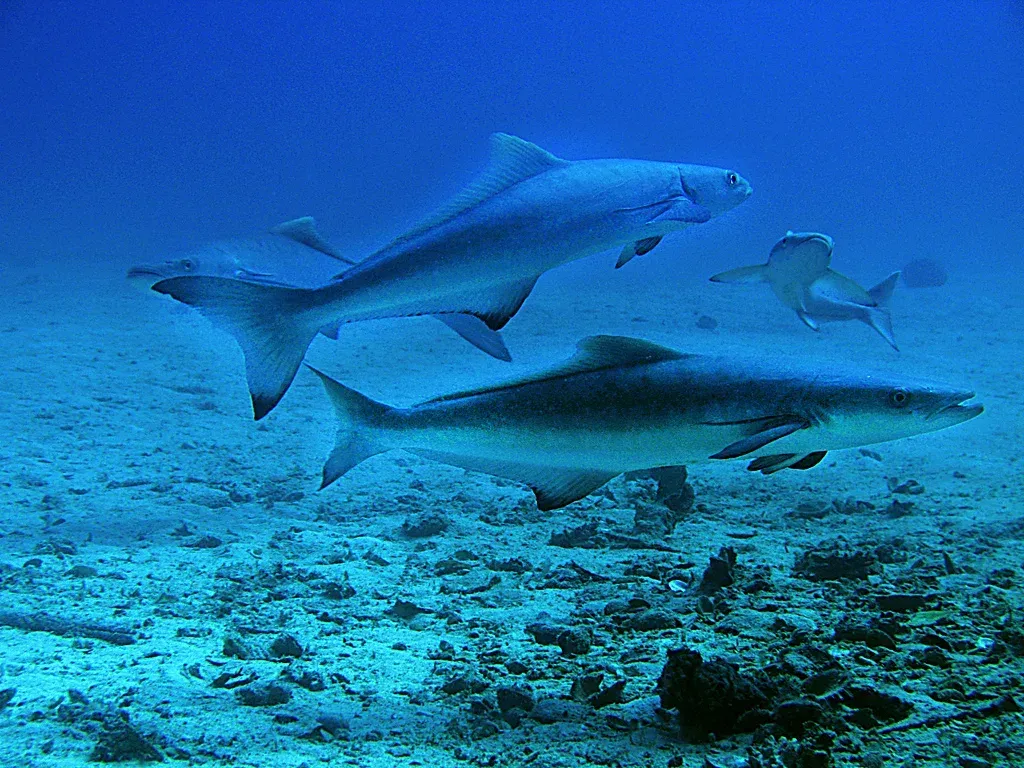
When it comes to prized fishing catches there are some which are rarely landed. Two fish species that have received little research attention will soon be the focus of a major Gulf-wide study. Dr. Sean Powers of the University of South Alabama is leading a $5 million project to study cobia and tripletail, two popular saltwater fish found along the Gulf Coast. The study will cover all five Gulf states and aims to address critical knowledge gaps about the species. Supporters hope the effort will lead to better management and conservation over time.
The study’s funding was secured through the National Marine Fisheries Service and directed to the Gulf States Marine Fisheries Commission, with assistance from Alabama Senator Katie Britt and her staff. The project was announced last week. Powers, who serves as Director of the Stokes School of Marine and Environmental Sciences, said the funding will help answer questions about species that are often overlooked by national programs.
“The reason Commissioner Blankenship and I are so excited is we’ve been talking to Senator Britt’s staff about some money to study species that are important to the Gulf states but seem not to be priorities for the National Marine Fisheries Service,” Powers said. “This money will be used to address problems from the states’ perspectives.”
RELATED ARTICLE: Auburn Chef Wins Alabama Seafood Cook-Off
Cobia and tripletail are both considered “data-poor” species. They are not encountered as often as more familiar fish, such as speckled trout or redfish. Anglers along the Alabama coast remember when cobia runs were a spring highlight, with boaters scanning the clear Gulf waters for the large brown fish. That migration has become far less reliable today, and researchers hope to better understand it through tagging and tracking.
Commissioner Chris Blankenship of the Alabama Department of Conservation and Natural Resources recalled that cobia fishing was once a major event. “Many people had towers on their boats to be able to spot the fish as they cruised down the coastline,” he said. “Strict management measures have helped cobia recover, but we need to understand much more about the migration.”
Powers said cobia populations vary widely by region. “Cobia is really interesting because if you talk to people along the Chesapeake Bay and the Atlantic, they’re having some of the best cobia catches they’ve ever had,” he said. “When you talk to people along the Gulf Coast, they don’t see the big migration that used to happen.” Scientists believe some cobia migrate seasonally around the Gulf, while others may stay resident year-round.
Tripletail, meanwhile, has seen a surge in popularity thanks to social media. Once targeted by only a few anglers, they’re now a favorite catch. “This data will help determine if our current management efforts are enough to sustain the population or whether changes need to be made,” Blankenship said.
To gather data, Powers said researchers plan to tag roughly 500 fish of each species this spring and summer across the Gulf. The goal in Alabama is to tag 100 cobia and 100 tripletail. Conventional, acoustic, and satellite tags will be used to track migration, behavior, and fishing pressure.
Very little is known about tripletail biology. They tend to gather near floating structures like buoys, channel markers, or seaweed mats in open water. Alabama limits anglers to three tripletail per person at 18 inches minimum fork length, while cobia are limited to one per angler and must measure at least 36 inches.
“The interesting thing we want to know about tripletail is, do all the tripletail come in from the sargassum, or is it just a percentage?” Powers explained. Scientists will tag both offshore and inshore tripletail to better understand how they move between the Gulf and local bays, such as Mobile Bay and Mississippi Sound.
Researchers also hope to gather information on spawning activity. “We think they come into the bays to beef up on the menhaden and abundant prey available, and then they go offshore to spawn,” Powers said. “It’s not just one migration; it’s several migrations on and offshore.”
The initial grant will focus on tagging efforts, with future funding supporting deeper data analysis. Satellite tags are set to record for 12 to 18 months. “We’re going to be out there tagging in April to make sure we catch the migratory cobia,” Powers said. “Tripletail won’t start coming in until it gets a little warmer.”
Both Powers and Blankenship hope the results will inform future fishery practices across the Gulf states. “These are two very cool species that we need more information on,” Powers said. “The tagging allows us to understand movements, migrations, and fishing mortality.”















Recent Posts